
When a new player arrives to Orlando City SC in Orlando, Florida, there is a lot more to getting settled than learning a new training schedule.
There are bank accounts to open, homes to find, schools to research, cars to arrange and immigration paperwork to navigate for international players. Behind much of that work are Head of Player Care Pedro Cox and Team Administrator Danny Quesada, whose job is to make the transition into Orlando as seamless as possible for the Club’s players and their families.
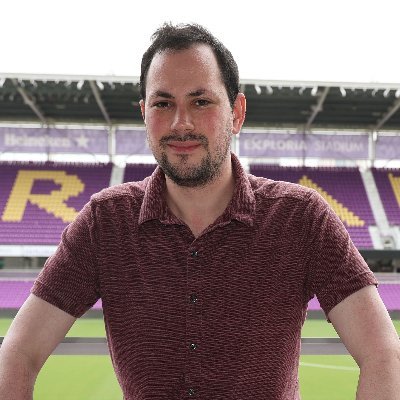
Both Cox and Quesada share an office and a vision for Orlando City’s players, but their paths to those roles were very different.
Cox, a Rio de Janeiro native, moved to the United States for university with no friends or family nearby. He’s been in some of the players’ shoes, learning a new language and having to figure out a new culture in a foreign country. He started at the Club in the camps and clinics department in the early days of MLS, moved to working stadium events in 2018 and, in April 2021, was tapped to be the first manager of Player Care & Administration.
With a background in multiple languages and his own experience coming from a different country, he was a natural fit. He started in April 2021, the day before the season kicked off.
“Back then it was just myself,” Cox said. “In 2022 we were able to have a second and third care person, and that just kind of shows the investment from ownership and the view from leadership to understand the need for something like this.”

Quesada’s road was longer, with a few more forks along the way. A UCF graduate who has spent most of his life in Orlando, he joined the Club during its final USL Pro season in 2014, starting as an account executive in ticket sales before moving to group sales through the first three seasons of MLS. When the Club decided it was ready to move the MLS side to a different training facility in Kissimmee, Quesada was asked to be the project manager for turning the former Houston Astros spring training facility at Osceola Heritage Park into a soccer complex.
“The opportunity came when Osceola Heritage Park was going to be a possible site for our training facility, and I was approached to come and take part in the project to revamp this place from a baseball ground to a football training facility,” Quesada said. “So I took the leap, became the project manager for the renovation of this place, turning baseball fields into soccer fields. Learning as I went, honestly, a lot of it.”
Quesada spent an equal amount of time planning as he did doing some of the work. At times, he was the one painting walls and building furniture himself. He went on to help remodel the Orlando Health Training Ground at Sylvan Lake Park for the Orlando Pride and then became the operations manager for the training facility at OHP from 2020 to 2022. In 2023, when the opportunity came to join team operations, he took it.
“It gets me to work closer with the team, be more impactful with the team,” Quesada said. “I knew the guys day to day. They knew my face day to day. Obviously, it wasn’t as close of a relationship as it is with Player Care, but it definitely was a huge help in the transition. We had a level of trust that wasn’t as complete as what we have now, but it was there, so it was important.”

Now, as far as what Player Care actually does, it essentially entails a little bit of everything. When an international signing joins the Club, they need bank accounts set up, schools vetted for their kids, phone plans set up, cars purchased, houses secured and, especially, a work visa and green card. All of those things, for the most part, fall on the shoulders of the Player Care team.
“Player Care serves as the bridge between a player’s professional life and everything happening around it, coordinating across immigration, relocation, housing, transportation, banking, education and family support while helping players understand the systems and responsibilities that come with living and working in the U.S.” Cox said. "We’re very unique because we’re different from most MLS teams. We sign a lot of international guys, and obviously we handle all players, not just international. But the international players take more of our time just because we’ve got to set up more things. It’s more to adapt to a new country. If you’re moving here from Oklahoma, sure, there’s an adaptation period, but at the end of the day it’s a lot easier than moving here from Argentina, being the first country you’ve ever lived abroad.”
Cox’s own immigration experience has proven useful. He went through the green card process himself, so he knows the small details of tracking down documents.
“I had an attorney that helped me do mine, but the little details of getting documents and everything, it’s one of those things you don’t learn in school,” Cox said. “I learned it because I did it for myself, and it helped a lot on the transition of helping the guys.”
The hardest part for the team sometimes is getting players to see why that paperwork matters. For most of their lives, soccer has been the only thing that has been a primary focus, with everything else coming after it as secondary. Now, as they become adults with adult responsibilities in new countries, those small things can become big learning curves.
“Getting the players to understand how important the stuff that we ask them is can be the toughest part,” Cox said. “For the green cards, we need a series of documents, and these guys don’t necessarily recognize the importance either for them or for the Club. We’ll ask for a birth certificate, and it sometimes takes a month to get it. It shouldn’t take a month, but the guys never understand: Hey, if I’m asking for something, it’s because it’s important for you or for the Club or both.”

As far as the work itself goes, Cox and Quesada don’t divide it by player. Whoever a player texts first handles it, and it works out either way. The Brazilians tend to gravitate toward Cox because of his background. When Cox is out of the office, Quesada gets by with Portuñol, a mix of Portuguese and Spanish.
“I understand probably 90-95% of Portuguese when they’re speaking,” Quesada said. “We manage.”
Language is also a big part of the job. First-year players attend English classes in person twice during the week. Due to Orlando being one of the easiest MLS markets in which to live as a Spanish or Portuguese speaker, the Player Care team is always pitching learning English to help with life after Orlando.
“We’ve got to prepare them for the world in Cincinnati or the world in Minnesota, where that’s not going to be the case,” Quesada said.
It matters for the players’ careers, too. Many of the Club’s young South American signings have dreams and aspirations to move to Europe or elsewhere, and clubs abroad want players who can assimilate with their colleagues from day one.
The language learning goes the other way. English-speaking players often take Spanish classes in their free time, and the locker room does its own teaching. Former Lion Facundo Torres once went around the training grounds telling everyone “Happy Birthday” after learning it one day in his classes, while Dagur Dan Thórhallsson took the same approach of repeating the same word over and over in Spanish.
It helps, as well, that the group of players within the locker room is always welcoming to new players and helps them feel at home in the new environment.
“With this group, in particular, the guys try to bring anybody new that comes in and make them feel part of the group,” Quesada said. “The English guys are always helping point out directions of where to go and telling them where to live, but they also like to hear from the perspective of a peer. Somebody that’s their age, somebody that’s in their position. So it’s great having that environment within the locker room.”

For most players, Cox and Quesada are the first people they see on arrival, often when they're at their most vulnerable. That's why their office has a couch right behind both of their desks that ends up getting a lot of use.
"A lot of times they'll come in, sit and chit-chat for 10-15 minutes and talk about their lives," Cox said. "They don't have a problem. They just want to come and talk. I always joke the couch is one of the best signings we’ve ever made."
While the players themselves are the main focus, that trust and work extends to the players’ families. Making sure they are equally taken care of so that players can perform and not have to worry about things at home is equally important to the team.
“Happy wife, happy life,” Quesada said. “If your wife and kids are happy and you’re thriving, then you can perform on the field better. You can be scoring 10 or 15 goals in a season, but if your wife hates Orlando, or the kids don’t like their school, it impacts your decision to stay or leave.”
The higher the profile of the player signed, the more complex the planning can become. When the Club signed Antoine Griezmann in March, they knew he wouldn’t be arriving until a few months later in June. The extra time let Cox and Quesada line up his new house, his car and the school for his children ahead of time.
“When we bring in a guy like Griezmann, naturally everything scales up. He’s very easy to work with, but obviously it took a lot of planning and talking ahead of time,” Cox said. “But it was great that we had enough time for him to get everything even before he landed. So when he actually got here, his kids were already enrolled in school. He was basically the fastest onboarding we’ve ever done because he was onboarded as soon as he stepped off the plane.”

For both Quesada and Cox, the Club itself holds a lot of meaning to them on a personal level. While they both started out working for the team in the early days, Quesada was around when Orlando City was announced as a team back in 2010. He has a longer view of the Club than almost anyone in the training facility.
“I have a lot of people that I feel like they’re family to me because of the growth of the Club,” he said. “We’ve seen it grow together.”
Today, the Club has staff across three locations and a full pyramid from the Academy to Orlando City B to the first team, all on one campus. That makes life easier for Player Care as well. A Homegrown player who visited the office years ago as a young, up-and-coming prospect is now a First-Team player who still comes back to see the same familiar faces.
“It’s funny seeing a guy like Alex [Freeman] going from sitting on the couch and talking with us to scoring in the World Cup,” Quesada joked.
Cox remembers the good parts of the job, too. Players like Antônio Carlos, who gave him a jersey when the Houston Dynamo came to town earlier this year and still meet up with him for lunch when they’re both in Rio. Former players stop by the office whenever they’re back in town and are sure to say hi and catch up. The goodbyes, Cox admits, are the hardest.
“They’re very good people, and they leave, and you’re just sad. But a lot of times they’re going for something better.”
For all the work they do, the goal of both men is a bit unusual: to be unnecessary.
“There won’t be a Pedro there or a Danny there for the rest of their lives, or there might not be one for the next club they go to,” Cox said. “So at least be able for them to learn English, develop themselves as adults, and be able to survive without us. That’s my life goal.”
“Our goal, at the end of it, is for us not to have a job,” Quesada added.
While that may be the goal at the end of the day, it’s still a long way away. For now, as new players keep arriving and favors keep piling up, Cox and Quesada will be ready to help at a moment’s notice. And, naturally, they’ll keep the couch ready for whoever pops into their office next.


